


You can live in the same house and still feel miles apart. One person is tired of repeating the same complaint, the other is exhausted from being blamed, and both of you are wondering whether booking help will make things better or just make the whole week feel heavier. For many Australian couples, couples counselling online is the first option they seriously consider, not because it's trendy, but because it feels less confronting than walking into a clinic together.
That instinct makes sense. Sometimes the question isn't “Do we need therapy?” It's “Is remote therapy the right next step for where we're at right now?” This guide treats online counselling as a triage decision, not a convenience upgrade. It helps you work out what online sessions involve, who they suit, what they cost, when they're a good fit, and when you should look at broader support instead.

Table of Contents
- When Sitting in the Same Room Is Not the Right Next Step
- What Online Couples Counselling Actually Involves
- What the Evidence Says About Effectiveness
- Online Versus In-Person Counselling Compared
- How Interactive Counselling Can Help
- Costs, Rebates and How to Choose a Provider
- Privacy, Safety and When Online Is Not Enough
- Preparing for Your First Online Session
- Common Questions and Where to Go Next
When Sitting in the Same Room Is Not the Right Next Step
Mia and Tom have done the thing a lot of Australian couples do before they reach for help. They've tried the late-night talk after the kids are asleep, the “we'll revisit this on Sunday” promise, and the awkward peace offering that doesn't quite land. By the time they start searching for support, neither of them wants another argument in the car on the way to a clinic, and neither of them wants to sit in a waiting room pretending everything's fine.
That's where online couples counselling starts to make sense. It gives them a way to begin without adding travel, parking, or the pressure of being seen walking into a clinic together. For couples in regional areas, interstate arrangements, or just different routines, the remote option can remove friction before the work even begins.
The useful question is not whether online therapy is “better” in a general sense. It's whether it fits the shape of the problem in front of you. If your main barriers are time, distance, childcare, or anxiety about starting, remote care can be a sensible first step. If the issue includes severe conflict, safety concerns, or situations that need broader support, the next step may need to be different.
Practical rule: choose the format that lowers barriers without lowering safety.
What Online Couples Counselling Actually Involves
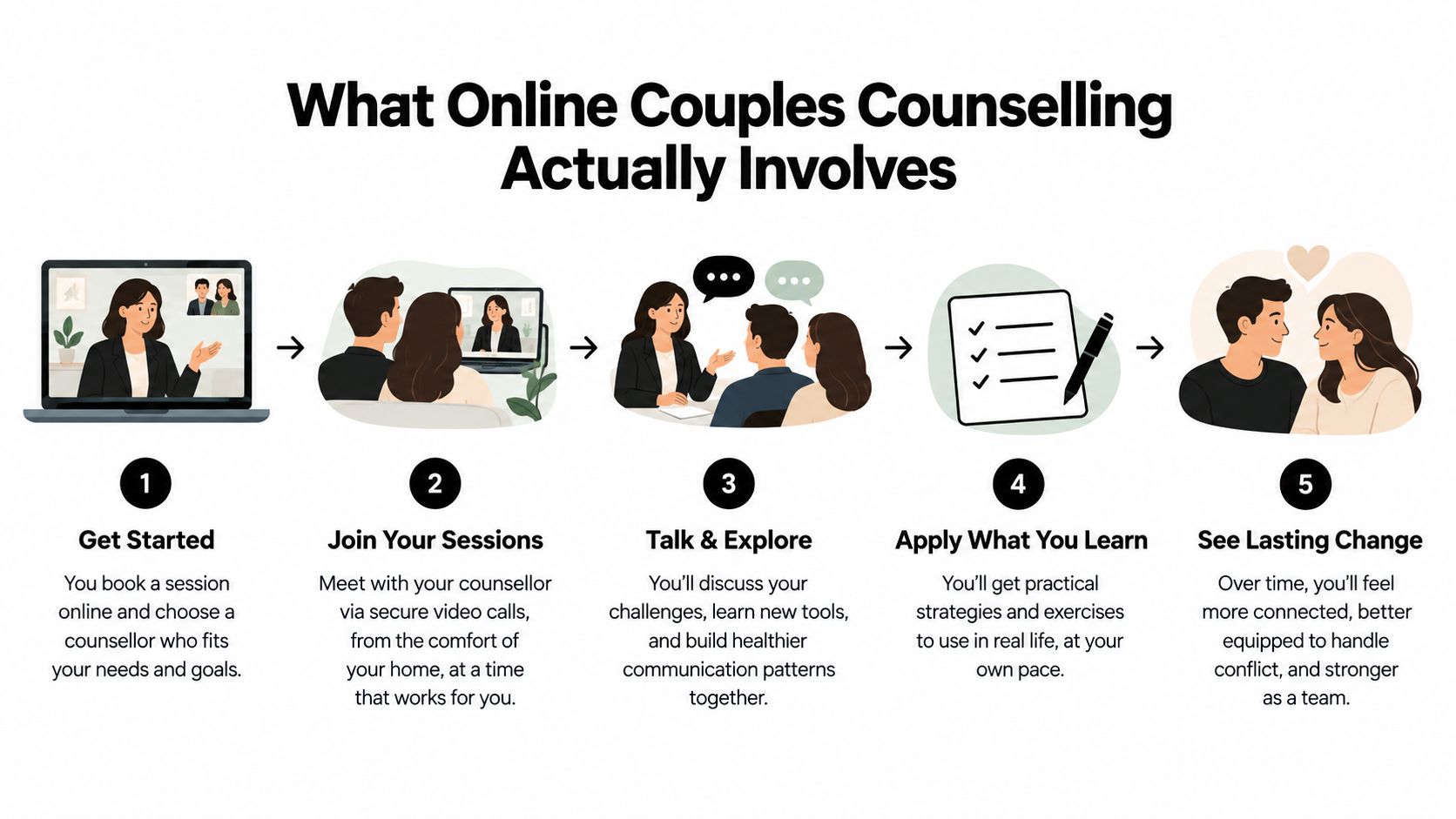
At its simplest, online couples counselling is relationship therapy delivered through a secure digital platform instead of a therapist's office. The work is more structured than a video call where two people talk over each other until one gives up. A well-run service uses clinical governance, registered practitioners, and digital safety procedures so sessions are organised, private, and supervised. The platform carries the conversation, while the therapist remains responsible for guiding the care.
A session usually has a shape
The arrangement works like a shared workspace that both partners enter from separate devices. You are in the same session, but the therapist manages the flow, watches for interruptions, and gives each person room to speak.
Some services begin with a 90-minute first session together, followed by separate 60-minute assessment sessions with each partner and a joint review to set the therapy focus. The sequence gives the therapist more than the loudest version of an argument. It can also clarify each partner's goals, concerns about the process, and ability to take part safely from home.
Those separate check-ins let the therapist map recurring triggers before joint work begins.
What the experience feels like
The first session generally gathers context rather than rushing towards solutions. Expect questions about how long you have been together, what has changed recently, which arguments keep returning, and what each of you wants to improve. You may also discuss practical details, such as where each person will sit, whether you can speak privately, and what to do if the connection fails.
Later sessions become more active. The therapist may guide a difficult conversation, pause an argument that starts looping, identify the point where a disagreement shifts into blame, and help you practise a different response. The screen does not remove the emotional work. It changes the setting in which that work happens.
The format should feel structured, but not stiff. If it feels like a free-for-all, the session is probably under-managed.
A secure online platform supports the process, but it cannot manage the relationship by itself. The therapist still needs to set boundaries, balance participation, and notice when one partner is shutting down or dominating the conversation. When those elements are in place, the technology recedes and attention stays on the relationship.
What the Evidence Says About Effectiveness
A couple may reach the same online session for very different reasons. One may need a practical way around distance or work schedules. Another may be testing whether guided conversation is suitable before committing to a clinic visit. That makes online couples counselling a triage decision, not just an upgrade in convenience.
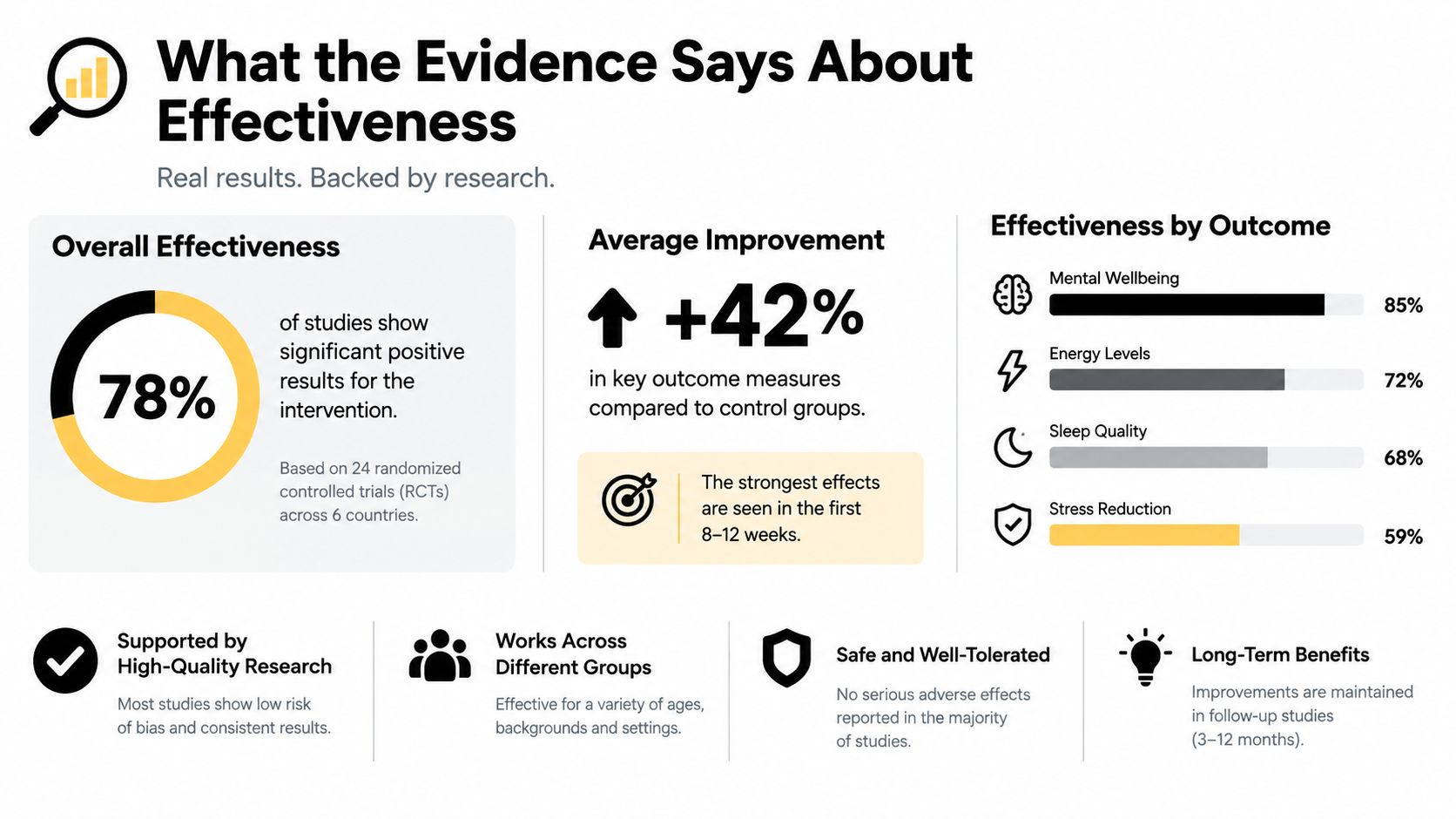
The strongest case is for couples who can speak freely, participate willingly, and work on communication or relationship repair without an immediate safety concern. The therapy model matters more than the screen. A qualified practitioner, secure platform, and evidence-based method create the conditions for useful work, while video itself does not guarantee a good outcome.
An Australian Medicare Mental Health listing documents accreditation to the National Safety and Quality Digital Mental Health Standard and use of AHPRA-registered psychologists delivering evidence-based approaches Medicare Mental Health listing. That places the service within recognised clinical and safety requirements rather than treating video calls as casual advice.
Where the evidence feels strongest
Remote counselling fits best when access is the main obstacle. Couples who live far apart, work irregular hours, or struggle to arrange travel can attend from a suitable private location. Removing that practical friction can make it easier to begin and maintain support.
A published Australian clinic assessment sequence also illustrates how online care can begin with structured screening and treatment planning rather than rushed advice Lexs online couples therapy. The sequence matters because a therapist needs to establish whether joint sessions are appropriate before focusing on communication exercises.
Where the evidence is thinner
The harder question is suitability. Public relationship support is spread across counselling, self-guided courses, separation assistance, parenting support, and emotional wellbeing services. Lifeline's relationship guidance covers concerns such as conflict, breakdown, and separation Lifeline relationship support. These different pathways show why “online or in person?” is often the wrong first question. The first question is whether the couple can safely and productively work together in a remote setting.
Online counselling can be a sound option for reflection, repair, and communication work. High volatility, coercion, urgent safety concerns, or needs beyond standard couples therapy call for a different level or type of support. In those situations, convenience should not decide the triage outcome.
Online Versus In-Person Counselling Compared
Online and face-to-face counselling can both be useful, but they solve slightly different problems. If you're choosing between them, don't ask which one sounds more modern. Ask which one makes it easier for both of you to show up with honesty, consistency, and safety.
| Factor | Online | Face-to-face |
|---|---|---|
| Access | Easier for regional, interstate, and long-distance couples | Best if you live near the therapist and can travel easily |
| Scheduling | Often simpler to fit around work and childcare | Can be harder when travel and parking are added |
| Comfort | Some people open up more from home | Some people focus better away from home distractions |
| Body language | Still visible, but the frame is narrower | Easier to read posture, movement, and room dynamics |
| Privacy | Depends on your home setup and device security | Depends on clinic environment and your travel to it |
| Emotional intensity | Can feel safer for starting difficult conversations | Can feel better for very charged conversations |
| Tech demands | Needs stable sound, video, and a private space | Needs no tech beyond booking and attendance |
The kitchen table is a good place for breakfast, not always for hard conversations. If your home is busy, crowded, or full of interruptions, an online session can turn into a performance instead of therapy. On the other hand, if travelling to a clinic adds stress, childcare complications, or long waits, the screen can make help realistically reachable.
Some couples usually thrive online. Busy professionals tend to like the flexibility. Long-distance couples can stay in the same therapeutic room even when they live apart. Regional and remote Australians often benefit from not having to choose between support and a long drive. Parents with limited childcare can keep momentum without turning every session into a logistical puzzle.
Others may need face-to-face support first, or instead. Couples with severe conflict, complex trauma, or safety concerns often need a setting where the therapist can assess more closely and respond more directly. The decision isn't about status. It's about fit.
How Interactive Counselling Can Help
A couple may book online support after a difficult argument, while one partner is also carrying grief, parenting pressure, work stress, or the effects of a major life change. That mix matters. Online counselling should be treated as a triage decision, like choosing the right level of medical care, rather than as a mere upgrade in convenience.
For a broad view of what a modern practice offers, explore couples counselling online through Interactive Counselling. The practice describes a licensed, diverse team supporting individuals, couples, families, children, and youth through evidence-informed therapy. Sessions are available in person, by phone, and through secure virtual appointments.
That range can help when the relationship is only part of the picture. One partner may want joint counselling, while the other needs individual support for stress or grief. A family session may also make more sense when parenting conflict is driving repeated arguments. Choosing the format that matches the problem is more useful than forcing every concern into one online couples appointment.
What makes a practice like this relevant
Availability affects whether therapy can continue. Daytime, evening, or weekend appointments may suit working couples and parents, while phone or virtual sessions can remove travel from an already crowded week. These practical details matter for Australian couples weighing support against time, childcare, and their budget.
The level of conflict matters just as much as the timetable. For example, the practice notes intake screening for conflict severity and offers to shift from joint online sessions to individual or family sessions if safety or volatility is flagged. That gives couples a clearer decision point: online joint work may suit manageable disagreement, while escalating or unsafe conflict calls for a different arrangement.
A safe, inclusive approach can also help when shame, overwhelm, or failed conversations are part of the problem. Before booking, ask how the provider screens risk, what happens if one partner cannot speak freely, and whether the therapist can change the session format.
A suitable service should feel clear, calm, and appropriate to the situation, not merely easy to book.
Costs, Rebates and How to Choose a Provider
The price is part of the triage decision. Before booking, work out whether the likely fee fits your budget and whether the service matches the kind of help you need. Recent Australian market guidance places private relationship counselling around A$130-A$250 per session, while online relationship counselling is around A$110-A$210 and can be A$30-A$60 less than an in-person appointment Australian relationship counselling cost guide. These figures are a comparison point, not a promise of what every provider charges.
Rebates need their own check. Couples counselling may not receive the same treatment as individual therapy, and private health cover can depend on the policy and service. Ask the provider what you would pay upfront, whether a rebate may apply, and which type of clinician delivers the session. Confirm the final out-of-pocket cost directly before booking.
A useful pre-booking filter is to separate “available” from “suitable”. A low fee does not help if the therapist mainly works with individuals, cannot support the level of conflict between you, or has no clear plan when joint sessions are not appropriate.
What to verify before you pay
Best practice: compare the therapist and service structure, not just the platform.
- AHPRA registration: Confirm the specific clinician assigned to you is registered and lists couples work as a focus area, not just individual therapy.
- Couples experience: Ask whether they regularly work with relationship concerns and what approach they use.
- Session fit: Check whether the service offers the session length, format, and frequency your situation requires.
- Transparent fees: Confirm the consultation price, cancellation rules, payment timing, and whether private health or other coverage applies.
- Scope of service: Ask whether the provider can offer individual or family support if joint counselling is not the right arrangement.
For Australian and New Zealand services, check the relevant registration body and ask practical questions before paying. The provider's explanation should be clear enough for you to understand what happens after the first enquiry.
The same comparison habit applies to other health services. For example, a local lactation consultant search is only a starting point. You still need to compare the practitioner's focus with the care required. Use that same filter here: identify the need first, then assess the person, cost, and service structure.
Privacy, Safety and When Online Is Not Enough
Privacy affects what each person can say and how openly they can participate. A partner who is overheard, monitored, or repeatedly interrupted may edit their words before they reach the therapist. Secure platforms help protect the connection, but the home environment still matters. Providers using clinical telehealth systems and recognised digital standards show that privacy and continuity are part of the service, not just technical extras Medicare Mental Health listing.
Set up the space before the session starts
Choose a room where the conversation cannot be overheard. Headphones, a closed door, and a short buffer before the appointment can reduce interruptions from children, housemates, or extended family. If privacy cannot be maintained at home, ask whether the provider offers another arrangement, such as separate appointments or a suitable clinical space.
Make a backup plan before difficult material comes up. Agree on a neutral phrase that means “pause”, decide where each person will go if the call ends abruptly, and keep the therapist's contact process available. These steps give the couple a clear route out of a tense moment instead of forcing them to improvise.
The provider should explain how notes are stored, who can access them, and what happens if the connection drops. Ask whether messages and appointment details are sent through a secure system. An unclear answer makes it harder to judge whether the service fits your privacy needs.
Know when to widen the support net
Before booking, agree on a separate safety contact and ask the provider what happens if one partner discloses coercion. Their protocol should explain whether joint sessions would pause and whether individual referrals would be offered. This turns safety from a vague concern into a practical decision.
Some relationship problems can be addressed through remote counselling. Others call for individual therapy, family support, or crisis assistance. Australian services include Relationships Australia, Lifeline, MensLine, and 1800RESPECT, each offering different forms of help Lifeline relationship support.
If fear, coercion, or violence is present, joint online work may not be the right starting point. Reconsider the format if a session leaves one person less safe, less able to speak, or more exposed at home. The aim is a setting that supports honest conversation without increasing risk.
Preparing for Your First Online Session
The best first session is the one where you're not wrestling with the laptop five minutes before it starts. Test the device, camera, microphone, and internet connection beforehand. Use headphones if you can, because even a good session can get derailed by echo, background noise, or someone else in the next room.
The physical setup matters almost as much. Put your phone on silent, choose a neutral background, and make sure the light is in front of you rather than behind you. If the conversation will be hard, decide in advance whether you'll sit side by side, at separate ends of the room, or in separate spaces. There isn't one right arrangement, but there is a right arrangement for your house.
The relational setup matters too. Agree on the one or two issues you most want help with, and write them down if needed. A therapist might start with questions like:
- What brought you here now?
- What pattern keeps repeating?
- What does each of you want to be different after counselling?
- What has already helped, even a little?
If your internet has been flaky in the past, the problem may not be your device, it may be the connection itself. A practical guide on why unstable internet breaks online experiences can be a useful reminder to check stability, not just speed, before a session begins.
Common Questions and Where to Go Next
Can one partner attend alone? Sometimes. A therapist may agree to meet one person first to clarify the situation, although couples counselling usually needs both partners involved at some stage. If only one person is willing to participate, individual counselling may provide a more suitable starting point.
How long does couples therapy take? There is no fixed timeline. Some couples need only a few sessions to get unstuck, while others benefit from longer support. Early sessions act like a map: the assessment helps identify the pattern and sets the direction for later work.
Do online sessions count for Medicare purposes where eligible? In some cases, clinical online services may connect with formal registration and rebate arrangements. Eligibility depends on the provider and the pathway used. Always confirm the fee and rebate structure directly with the provider before booking, as couples work is often treated differently from individual therapy.
If you are ready to explore options, compare reputable directories and ask each provider about registration, session format, fees, and crisis support. A general wellness resource, such as this meditation overview, may also help you consider how you want to manage stress before the first appointment.
Use this 3-point triage check before booking:
- Can both partners speak privately at home without being overheard?
- Is the conflict stable enough for joint work, or is individual or crisis support needed first?
- Does the provider list AHPRA registration, a secure platform, and clear fees?
If any answer is unclear, pause and ask the provider directly. That short check can prevent a mismatch between the level of conflict, the available budget, and the support being offered.
For more practical Australian relationship and wellness guides, check The Kotaku Times for clear, local explainers that help you compare options before booking.