

New Zealand’s online world has a way of speeding up without asking permission. A game update lands while you’re still mid-commute, a new season drops on a streaming service you forgot you were paying for, and your phone quietly stacks notifications like it’s building a second inbox. Add the usual spread of platforms: PC, console, mobile, and whatever your friends are currently obsessed with, and it’s easy to end up “busy online” without feeling like you’ve done anything you enjoyed.
The healthier pattern many Kiwis are drifting toward isn’t about keeping up. It’s about curating. Choosing the digital habits that fit around work, family, study, and downtime, and letting the rest pass by without guilt. A dynamic digital lifestyle in Aotearoa isn’t a trophy cabinet of apps and subscriptions. It’s a setup that still feels good a week, a month, and a year from now.
The always-on feed, and why it feels louder than it used to
A big part of digital fatigue isn’t the content itself; it’s the constant sense that something is about to happen. Updates, limited-time events, new drops, and algorithmic recommendations are designed to keep you hovering near the “next thing.” Even when you’re not actively playing or watching, the background noise is still there, nudging you to check, refresh, respond, and repeat.
A practical fix isn’t to quit everything. It’s to decide what deserves your attention and what doesn’t. Turning off non-essential notifications, setting “quiet hours,” and treating some apps like tools rather than companions can instantly make your digital life feel more human again.
Short sessions, big satisfaction: the rise of flexible entertainment
Not every night in New Zealand is built for a two-hour story arc or a ranked grind. That’s why short-session entertainment has become such a reliable part of the routine. Ten minutes here, half an hour there; something that you can drop into without preparation and step away from without consequences.
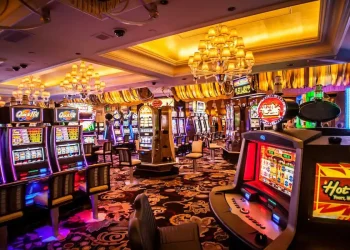
This is also where the broader entertainment mix has widened. Some people bounce between a mobile game, a quick co-op match, an indie title, and a stream in the same evening. Others add in casino-style games as an optional, adult-only form of short-session play, often because the format is built around fast navigation and quick exits. You’ll even see the same “keep it light” mindset applied to things like Minimum Deposit Casinos in New Zealand, where the appeal is often less about chasing big moments and more about keeping the spend small and predictable.
If you do engage with that kind of entertainment at all, the key is treating it like any other digital habit: intentional, bounded, and never used as a default boredom cure. Convenience is exactly what makes some online habits easier to overdo.
Fast nights and slow nights: building a rhythm that doesn’t burn you out
A balanced digital routine usually includes two types of evenings. The first is high-energy: competitive play, group chat noise, fast reactions, and the kind of focus that leaves your brain buzzing afterwards. The second is low-pressure: something cosy, something calm, and something you can enjoy while you decompress.
Both are useful. The problem starts when every session becomes high intensity by default, or when “relaxing” turns into endless scrolling that doesn’t actually rest you. Having a deliberate mix (one or two higher-energy nights, a couple of slow ones, and at least one genuinely offline pocket) keeps digital life fun instead of draining.
The Kiwi setup: personalised libraries, rotating subscriptions, and less clutter
New Zealand’s digital habits are increasingly customised. Libraries get sorted. Home screens get tidied. People create different “lanes” for different moods: one device or app for work and admin, another for socialising, and another for proper play.
Subscriptions are also being treated more like rentals than commitments. Instead of paying for everything all year, plenty of people rotate services based on what’s actually worth using that month. It’s a small change, but it cuts down the feeling that your digital life is a pile of ongoing obligations.
While the global giants dominate the storefronts, New Zealand-made games still matter in a very specific way: they become familiar anchors in the mix. Wellington-based studio PikPok, for example, has been making games since 1997 and publishes across multiple platforms. This is a reminder that the local scene isn’t just a footnote; it is a vital part of the ecosystem.
Small country, strong communities: New Zealand’s social layer
New Zealand’s online spaces often feel more personal than massive overseas communities simply because the degrees of separation are smaller. You’ll see the same names across different servers. Friend groups overlap. People move between games, but the social circle tends to travel with them.
That social layer doesn’t only live online either. Events give the community an “in real life” anchor point, and they’re a big part of how digital hobbies stay social instead of isolating. Armageddon Expo’s 2026 schedule, for example, lists show across Christchurch (March 21-22), Wellington (April 3-5), and Auckland (April 25-27).
What the rules look like in New Zealand for online casino play
If online casino-style entertainment is part of someone’s wider digital mix, New Zealand is a market where the legal context matters. The Department of Internal Affairs explains that, under the Gambling Act 2003, remote interactive gambling is prohibited with limited exceptions, such as certain products tied to the Lotteries Commission and the Racing Board.
At the same time, New Zealand is currently in the process of enacting a formal licensing framework for online casino gambling. The Online Casino Gambling Bill, as published on the New Zealand Legislation website, outlines a proposed licensing regime including restrictions on unlicensed operation, advertising limits, and consumer protection mechanisms. The government has confirmed that the first licenses are expected to be issued by December 1, 2026.
The takeaway for players is simple: do not assume the online casino experience is governed the same way as other digital entertainment. If someone chooses to engage, it’s worth keeping it clearly in “paid entertainment” territory: budgeted, limited, and never treated as income or a shortcut.
Keeping it sustainable: the habits that matter more than the hardware
A good digital lifestyle in New Zealand doesn’t require the newest console, the fastest PC, or every subscription under the sun. It comes down to habits that reduce friction and increase enjoyment: fewer notifications, more intentional sessions, clearer boundaries, and a routine that includes genuine downtime.
If you build your digital life like a playlist rather than a warehouse, only keeping what you actually want to press play on, you get something that feels flexible, modern, and surprisingly calm, even while the wider internet keeps accelerating.
Final word: don’t chase the internet, curate it
New Zealand’s digital world will keep moving fast. That part won’t change. What can change is your relationship with it.
The healthiest approach isn’t trying to keep up with every drop, patch, trend, and platform. It is choosing a mix that fits your life in Aotearoa: a few go-to games, a few social spaces, a few small rituals, and enough boundaries that your digital routine stays fun rather than quietly becoming another form of noise.