
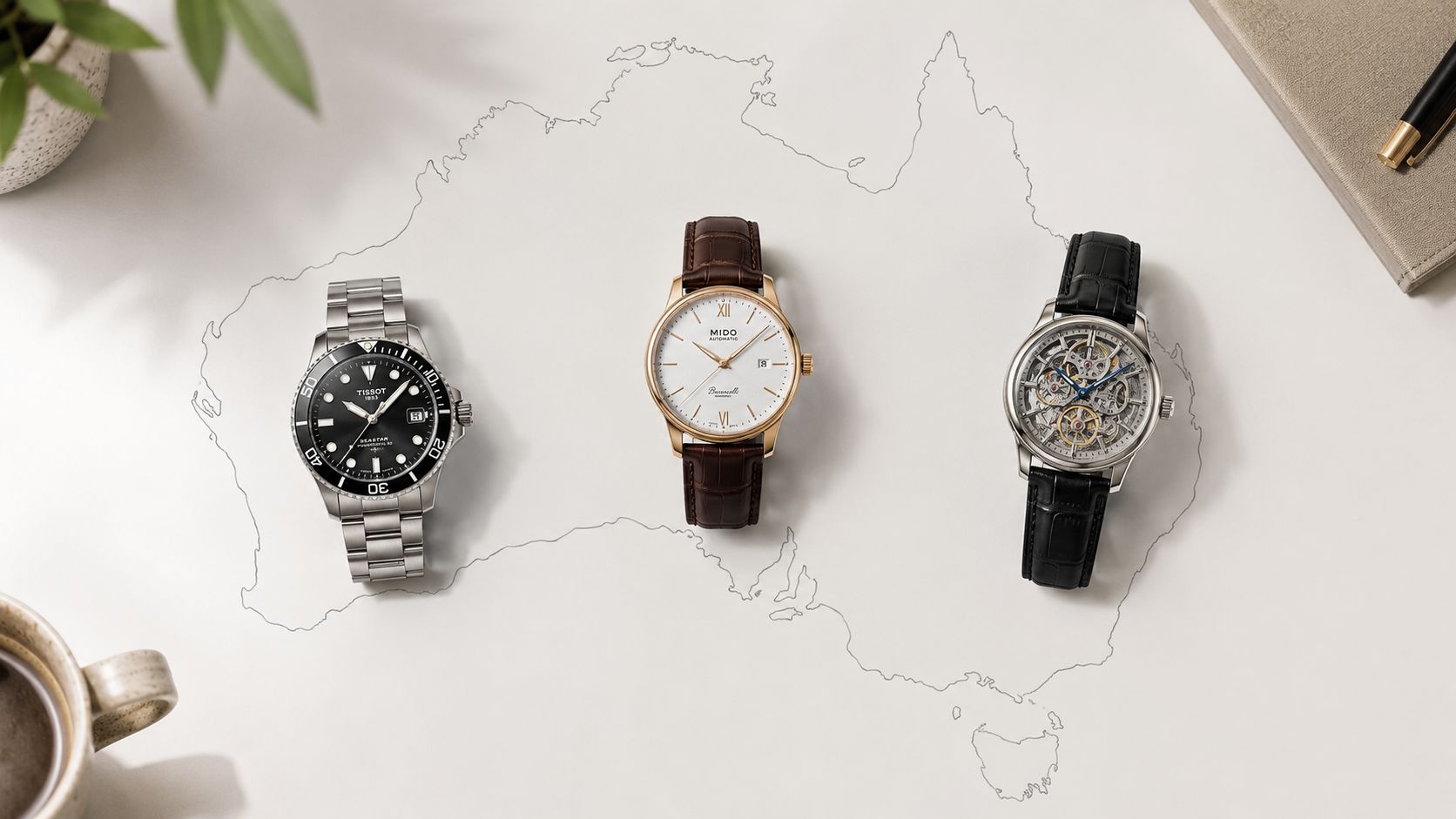
Australia imported US$682.62 million of clocks and watches from Switzerland in 2025, while only US$2.91 million of Swiss watch movements and assembled movements crossed the same border. That gap tells you almost everything about Swiss watch brands in Australia, buyers here aren't shopping for parts, they're buying finished, high-value watches with a name on the dial and a tax bill attached.
Walk into a Brisbane watch boutique and you'll see the puzzle straight away. One Swiss watch looks like another at first glance, yet one might sit near entry-level luxury and another can leap into serious collector territory because the market is built on brand power, finishing, and a tiny group of dominant houses rather than a wide field of equal players.
That's why this guide starts with the label, then moves to the industry behind it, and finishes with the part Australian shoppers care about most, what to buy, where to buy it, and how much of the final price is shaped by duty, GST, and servicing rather than the movement alone.
Table of Contents
- Introduction
- What Makes a Watch Genuinely Swiss
- How the Swiss Watch Industry Really Works
- How WatchClick Can Help
- Swiss Watch Brands by Tier and Style
- How to Choose Your First Swiss Watch
- Buying and Servicing Swiss Watches in Australia
- Where to Learn More and Final Thoughts
Introduction
The easy way to think about Swiss watch brands is to picture a boutique window with two watches that both say “Swiss Made” somewhere on the dial. One might be a straightforward everyday piece, the other might be a luxury object built for display, resale, and long-term ownership. The label alone won't tell you how the watch got made, how hard it'll be to service, or why the price in Australia feels so different from what you saw overseas.
For Australians, the local market makes this even more interesting. In 2025, Australia imported US$2.91 million of Swiss watch movements and assembled movements, yet it imported US$682.62 million of clocks and watches from Switzerland in the same period, so the market here is overwhelmingly about finished pieces, not loose components (Monochrome Watches, Trading Economics). That matters because the buyer in Australia usually meets Swiss watchmaking through a retailer, an authorised dealer, or a grey-market listing, not through assembly benches or spare parts bins.
Why the Australian angle matters
Swiss exports were still a giant global business in 2025, worth about CHF 25.6 billion across 14.6 million watches, even though unit volume fell 4.8% from the previous year (Monochrome Watches). That's the key to understanding the category, it's a high-value, low-volume industry that makes prestige products more than mass-market tools.
Practical rule: if two Swiss watches look similar but sit in very different price brackets, the difference is usually brand, finishing, distribution, and after-sales support, not just what's inside the case.
The rest of the guide breaks down what Swiss Made really means, how the industry is structured, which brands sit where, and how Australian buyers can judge whether a price is fair before they hand over the card.
What Makes a Watch Genuinely Swiss
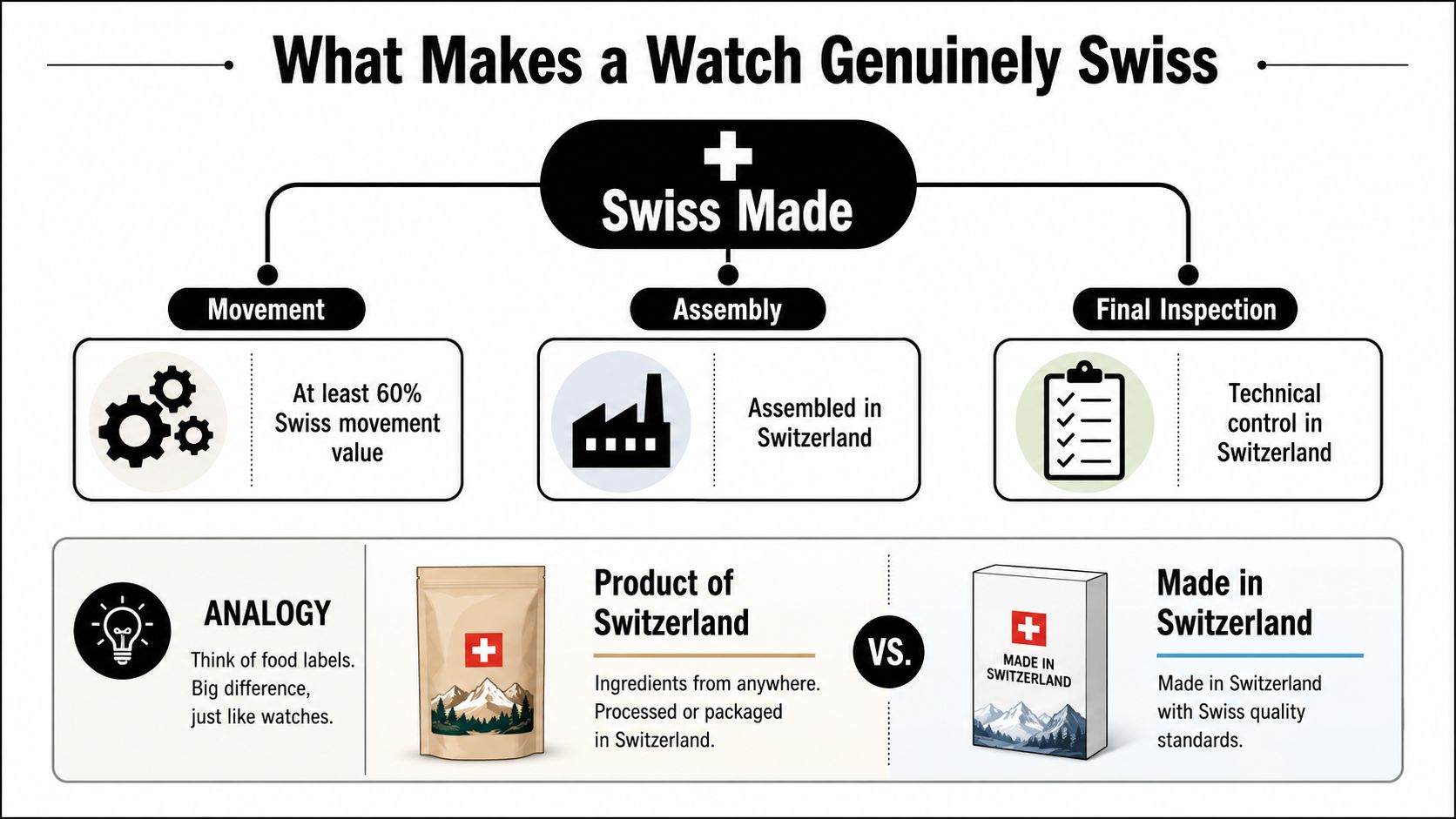
Think of Swiss Made like a food label. “Product of Switzerland” and “Made in Switzerland” sound close, but they don't mean the same thing, and shoppers who treat them as identical usually miss the point. On watches, the country label tells you something real, but it doesn't automatically mean every screw, case, and component was made domestically.
The three checks that matter
A genuine Swiss watch needs to clear three broad hurdles: movement origin, assembly in Switzerland, and final inspection in Switzerland. In plain English, that means the watch isn't just marketed by a Swiss-sounding company; it has to pass a specific production pathway before the label can sit on the dial or caseback. The visual question for buyers is simple: does the brand make the watch in Switzerland, or does it source parts from elsewhere and finish the job there?
That distinction is where a lot of confusion starts. Many brands are Swiss by legal origin, but that doesn't mean every part comes from one factory on one alpine hillside. It's more like a recipe with controlled ingredients and a verified final kitchen, not a fairy tale about one watchmaker hand-building every piece from scratch.
Why readers get tripped up
The internet often blurs Swiss-branded and fully Swiss-made. That confusion shows up constantly in collector discussions, where buyers ask which names are domestic in manufacture and which are mainly heritage labels, assembly houses, or brands with globally sourced supply chains.
A Swiss dial can still be a good dial even if the brand doesn't make every part itself. The trick is knowing what you're paying for.
For Australian shoppers, that scepticism helps. A watch on local sale might be perfectly legitimate and still rely on outsourced parts, shared movements, or partial assembly. The point isn't to sneer at the label, it's to read it with your eyes open, then judge the watch on finishing, serviceability, and whether the brand's story matches the price.
How the Swiss Watch Industry Really Works
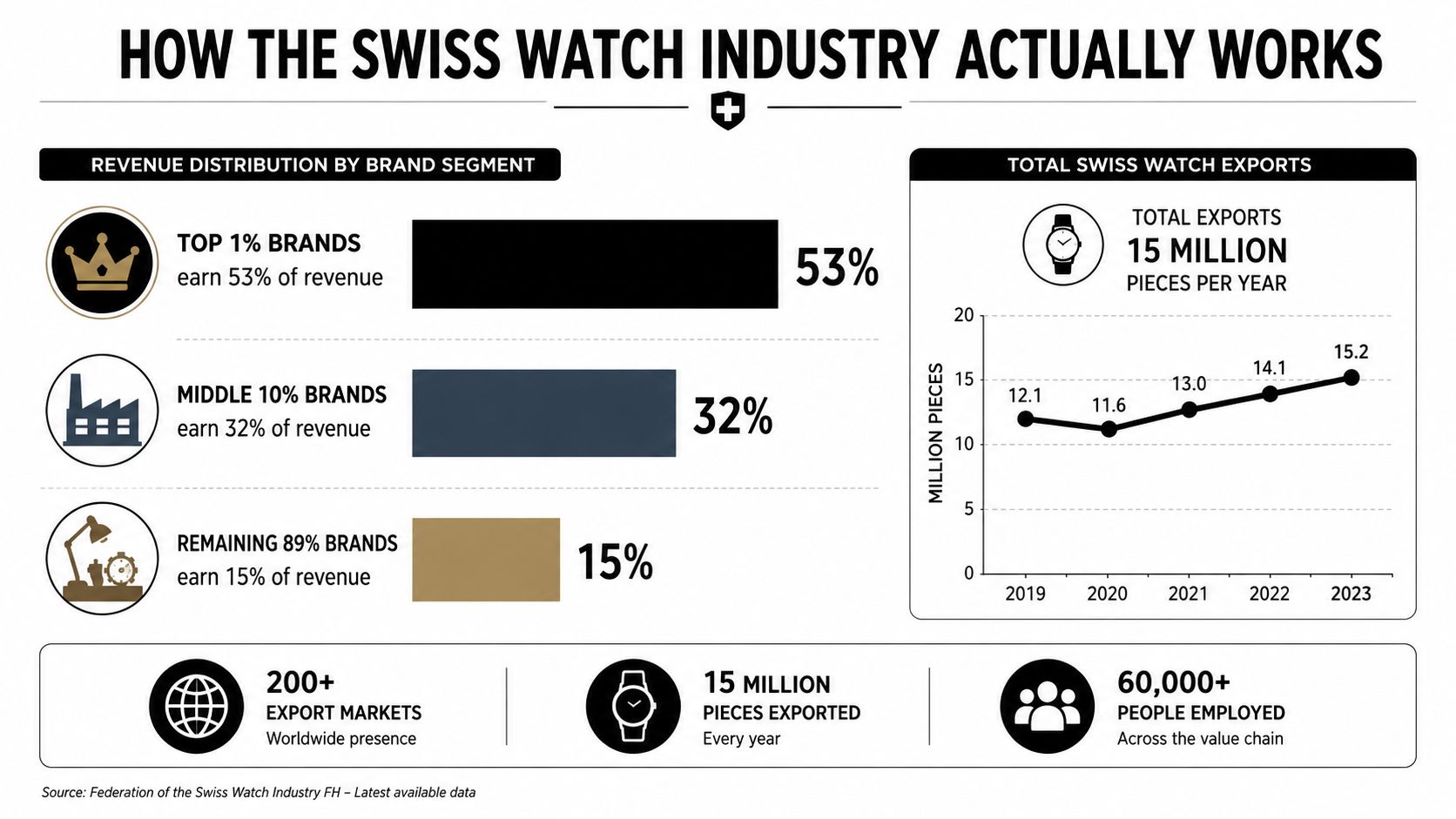
The common picture of Swiss watchmaking is a country full of tiny ateliers, each turning out a few beautiful watches. The market is much more concentrated than that, and much more commercial. Industry ranking data for 2023 says roughly 350 Swiss watch brands existed, but just 25 brands accounted for 90% of sales, and 13 brands accounted for 75% of the market (Revolution Watch).
A small number of names do most of the work
That concentration helps explain why Australian retail feels familiar. Walk into a store and you keep seeing the same major names, because the market is shaped by a handful of powerful brands. The same analysis says the Big Four luxury houses, Rolex, Patek Philippe, Audemars Piguet, and Richard Mille, held a combined 43.9% market share (Revolution Watch). The rest still matters, but the category is pulled hard by a very small group of labels.
Swiss watches are prestige products, not volume products
The same data set says the industry sold about 16.9 million Swiss watches in 2023, compared with around 80 million advanced smartwatches worldwide in the same year (Revolution Watch). That gap shows what Swiss watchmaking is built around, low-volume, high-value production that competes on heritage, finishing, and brand cachet rather than raw output.
If a watch family is hard to find in Australia, that often reflects the way the industry is structured, not just a retailer's stock choice.
For local buyers, that structure also helps explain the price gap between authorised dealers and parallel imports. Imported Swiss watches can pick up Australian duty and GST on the way in, while local dealer stock also reflects the costs of official distribution, servicing, and showroom space. Smaller independents are harder to see on the shop floor for the same reason. A retailer cannot stock everything equally, so it naturally favours brands that sell strongly, service cleanly, and justify the space they take up. That is why the Swiss category looks broad on paper, but narrower in practice.
How WatchClick Can Help
When someone in Australia is comparing Swiss watches, the hardest part is often not choosing a brand, it's finding a retailer that makes comparison easy without turning the process into a sales push. That's where a curated store such as WatchClick can be useful, especially if you want to browse established names, compare styles across price bands, and see what sits in stock before you commit.
What it solves for the buyer
WatchClick is useful when you want a clean shortlist rather than an endless scroll. It carries a spread of recognisable Swiss and European names, including Tissot, Longines, Nomos, Oris, and more, which makes it easier to compare entry, mid, and premium pieces side by side. For a buyer who knows they want a Swiss watch but hasn't settled on the right lane yet, that kind of catalogue cuts down the noise.
It also helps if you're shopping for a gift and need a faster decision. The combination of watch styles, jewellery options, and straightforward filtering means you can separate everyday wear from dressier picks without hopping between ten different sites.
When it makes sense
The sweet spot is the shopper who wants variety, secure checkout, and a retailer that feels organised rather than overwhelming. If you're looking at Tissot watches, a clearly laid-out category page is handy because you can compare the brand's sportier and dressier looks without losing context. That's especially helpful when you're trying to decide whether you want a practical first Swiss watch or something a bit more polished for work and dinner.
The site's value is less about hype and more about reducing friction, especially for people who already know the brand family they like. If you want a broader buying overview after browsing, the mix of watches and jewellery gives a decent sense of what sits in the European retail market without forcing a single aesthetic.
Swiss Watch Brands by Tier and Style
A better way to think about Swiss watch brands is by tier, because the label covers a lot of ground. Some brands are entry points for first-time buyers, some live in the middle where most serious purchases happen, and a few sit at the luxury end where finishing, rarity, and resale matter as much as timekeeping. Once you sort them by use case rather than hype, the market gets a lot easier to read.
Swiss Watch Brand Tiers at a Glance
| Tier | Example Brands | Typical Style | What You Get |
|---|---|---|---|
| Entry Swiss | Tissot, Hamilton, Mido, Victorinox Swiss Army | Everyday sport, field, dress, easy-wear pieces | Solid Swiss-made basics, dependable movements, lower-friction ownership |
| Mid-tier Swiss | Longines, Oris, Rado, Baume & Mercier, Tudor, Breitling | Heritage reissues, divers, pilots, sport-luxury, dress watches | Better finishing, stronger brand identity, more collector interest |
| High-end Swiss | Rolex, Omega, Jaeger-LeCoultre, IWC, Patek Philippe, Audemars Piguet, Vacheron Constantin, Richard Mille | Icons, manufacture pieces, high complications, luxury sport | Higher prestige, tighter production, stronger resale pull, more expensive servicing |
Picking by style, not just price
If you want a daily wearer, the entry and mid tiers are where many Australians start. Brands like Tissot and Hamilton give you the Swiss watch experience without forcing you into collector anxiety, while Longines and Oris add a bit more finishing and heritage appeal. On the other side, Rolex, Patek Philippe, and Audemars Piguet are so dominant that they shape what many people think Swiss watchmaking looks like in the first place.
For a more technical buyer, style matters just as much as status. Dive watches feel different from pilot watches, and dress watches behave differently again under cuff and collar. A lot of people buy their first Swiss watch because they like the look, then discover later that the watch's size, bracelet comfort, or service cost matters more in daily life than the badge alone.
Buy the style you'll actually wear. A “better” watch that stays in the box is just an expensive object.
The current market softening also changes the shopping conversation. When turnover weakens for top brands, local discounting and grey-market opportunities can become more visible, but only if you know the watch's normal position in the market and aren't fooled by a fake bargain. In Australia, that means shortlisting by tier first, then checking which dealer channel gives you the right mix of price, warranty, and future service support.
How to Choose Your First Swiss Watch
The easiest way to avoid buyer's remorse is to decide what kind of ownership you want before you fall in love with a dial. Quartz, automatic, and hand-wound watches all tell time, but they behave differently in everyday life, a bit like choosing between an electric scooter, a manual car, and a vintage weekend toy. None of them is wrong, but each one asks something different from you.
Movement, complication, and servicing
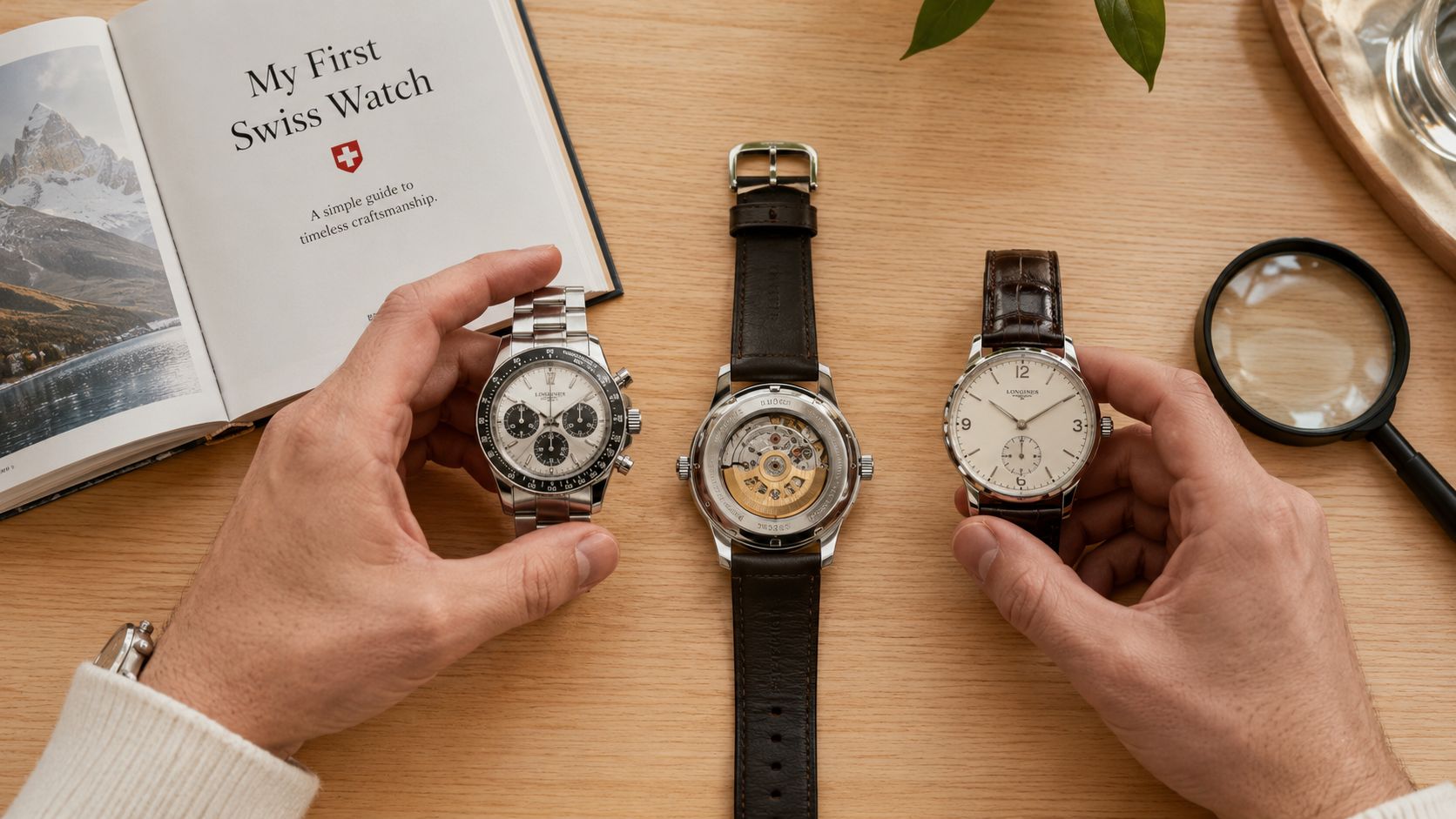
A quartz watch is usually the least demanding, it keeps time reliably and doesn't ask much from the owner. An automatic is the sweet spot for plenty of buyers because it brings mechanical charm without needing daily hand-winding, while a hand-wound watch suits someone who enjoys the ritual and doesn't mind that extra step. The right choice depends on how much romance you want in the experience, and how much maintenance you're willing to accept.
Complications are worth separating into useful and decorative. A date window is handy, a chronograph can be practical if you'll use it, and more exotic functions are often bought because they're interesting rather than essential. If you're shopping your first Swiss watch, don't pay extra for a complication you won't touch.
Why brand concentration affects resale
The concentration discussed earlier matters here too. The brands that dominate sales also tend to dominate resale conversation, authorised-dealer demand, and second-hand recognition. If a watch comes from one of the big houses, the market usually understands it faster, which can help when you eventually sell, trade, or insure it.
That doesn't mean a lesser-known brand is a bad buy. It just means you should treat it as a personal choice first, and a resale asset second. A watch you love and wear beats a watch you bought because someone online said it was “the best investment”.
Practical rule: if you're choosing between two similar watches, check who services it locally before you check who is louder on social media.
For Australian buyers, the channel matters just as much as the calibre. The same watch can feel like a different deal depending on whether it comes from an authorised dealer, a parallel importer, or a private sale, especially once tax treatment and warranty are factored in. If you're shopping for workwear, you can also think about how the watch sits next to your clothes, and if you need ideas for that broader wardrobe balance, this style guide on dresses and shirts that take you from coffee to dinner is a handy side read.
Buying and Servicing Swiss Watches in Australia
In Australia, the biggest price mistake is assuming the sticker reflects only the watch itself. It doesn't. Imported goods into Australia are typically subject to 5% customs duty above AU$1,000 and 10% GST calculated on the customs value plus insurance and freight, with SAC or import-declaration requirements depending on shipment value and channel (IBISWorld). That tax and logistics layer can make two otherwise identical watches land at very different prices.
Dealer, grey market, or private sale
An authorised dealer is the safest route if you want full brand backing, warranty support, and a cleaner paper trail. A grey-market or parallel import can be cheaper, but the lower price usually comes with more questions about warranty handling, local service access, and who is responsible if something arrives wrong. A private sale can be even cheaper again, but only if you're comfortable checking authenticity, service history, and condition yourself.
The reason Australian retail pricing can swing so sharply is that landed cost isn't just movement and case. Freight, insurance, duty, GST, and channel margin all shape what ends up in the display case. That's why the same Swiss watch can look expensive at an authorised counter and tempting on an imported listing, even when the watch itself is technically identical.
What to check before you buy
A clean buying checklist goes a long way here.
- Ask for warranty terms: Confirm whether the card is local, international, or effectively limited by where you bought it.
- Check service access: Make sure the watch can be maintained in Australia without a long export process.
- Request the full history: For pre-owned pieces, ask for receipts, service records, and any replacement parts.
- Inspect the case and bracelet: Precious-metal and non-precious-metal cases are common in the Australian import mix, so know exactly what you're paying for (Trading Economics).
- Confirm the final price: Include GST, freight, and any extra handling costs before comparing channels.
If a seller won't explain the warranty in plain English, keep walking.
That last point matters because service is part of ownership, not an afterthought. A Swiss watch is a long-term object, and if you buy it without thinking about where it'll be serviced or who'll stand behind it, the saving can disappear fast. For a broader practical shopping mindset, this piece on duty-free gifts worth bringing home from your trip shows how channel and tax can change the price of a “deal”.
Where to Learn More and Final Thoughts
If you're serious about buying Swiss watch brands, settle four decisions first, your budget tier, your movement preference, your buying channel, and your service plan. That sounds simple, but it stops most bad purchases before they happen. A watch should fit your wrist, your routine, and your ability to maintain it, not just your mood on the day you buy it.
For deeper reading, the most useful next stops are the Federation of the Swiss Watch Industry statistics pages, reputable industry market reports, and serious watch publications that cover brand structure rather than just glamour shots. If you want a broader Australian lifestyle lens while you keep researching, the Kotaku Times fashion category is a natural place to browse adjacent style coverage without losing sight of how you dress and wear the piece.
The local trade figures make one thing clear. Australia's Swiss watch market is niche, but it's active enough to support serious buying, serious servicing, and serious collecting. Treat the purchase like a long-term decision, and you'll judge the watch on provenance, support, and ownership cost, not just the shine in the window.
If you're ready to buy, spend the next hour comparing one entry, one mid-tier, and one luxury Swiss model at an authorised dealer, then price the same watch through a reputable parallel importer so you can see how duty, GST, warranty, and service change the final outcome.